




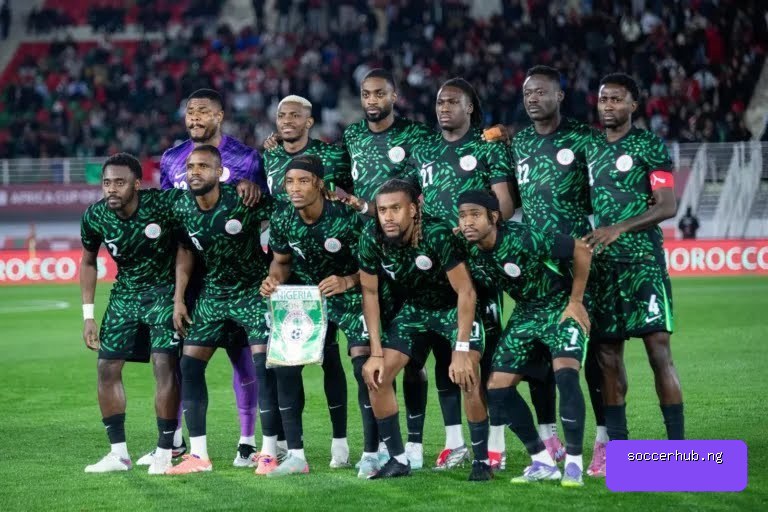

Every elite footballer watches the FIFA World Cup with a analytical eye, but for former Super Eagles captain William Troost-Ekong, the tournament comes wrapped in a heavy blanket of introspection.

As Africa’s top footballing nations continue to test their mettle, break boundaries, and re-write tactical blueprints on the global stage, one stubborn, unshakeable thought has followed the veteran defender through every matchday broadcast.
What if Nigeria had been there?


It is a question born from a complicated emotional cocktail: equal parts immense regional pride and profound sporting frustration.
Pride in the Continent, Frustration in the Absence
For Troost-Ekong, watching African football establish deep roots within the sport’s global elite brings genuine satisfaction. The gap between continents has vanished; African tactical systems are robust, individual profiles are world-class, and physical dominance is a given. The continent no longer arrives at the World Cup merely happy to participate—it arrives expecting to dictate terms.
Yet, that very excellence serves as a mirror to the Super Eagles’ recent misses. For a country widely heralded as a crown jewel of African talent, sitting on the sidelines while neighboring rivals script history is a tough pill to swallow.
“I think the motivation has always been there,” Troost-Ekong reflects openly. “All of us are incredibly eager to see Nigeria back at the World Cup, and missing out again only increases that desire.”
A Mature Squad Left in the Cold
The core of Troost-Ekong’s frustration doesn’t just stem from a general sense of patriotism; it is rooted in a objective evaluation of the talent sitting inside the Nigerian dressing room.
The current generation of Super Eagles boasts elite attackers dominating European top flights, seasoned midfielders orchestrating tactical setups globally, and a backline with continental tournament scars. To have that collective prime bypass the ultimate stage feels like a massive sporting waste.
                      THE TROOST-EKONG PERSPECTIVE
                                   │
         ┌─────────────────────────┴─────────────────────────┐
         ▼                                                   ▼
   THE TACTICAL MATURITY                               THE RECENT MISSES
   • Core players at peak physical ages.               • Structural slip-ups in qualifiers.
   • Surviving member stability from Russia 2018.      • Watching rivals thrive on global stages.
   • Proven depth across European top tiers.           • Accumulated motivation for future cycles.
“I would have loved to see Nigeria there because, when you watch the African teams performing so well, you cannot help but think Nigeria would also have put in a strong performance,” the veteran center-back notes.
“Looking at the quality and talent within the squad, I believe they would have been ready. Many of the players have matured, and some also gained valuable experience at the 2018 World Cup.”
Fuel for the Next Cycle
If there is a silver lining to the agony of the spectator’s seat, it is the fuel it provides for the future. The emotional weight of watching from afar is actively reshaping the psychological baseline of the national team pipeline.
With the NFF locking down long-term technical stability under a unified coaching system, the message reverberating through the senior squad is clear: qualification is no longer a milestone to celebrate. It is the absolute bare minimum.
For Troost-Ekong and his contemporaries, the lingering question of “What if?” will eventually stop being a phantom that haunts them from the television screen. Instead, it is being channeled into a single, collective obsession to ensure that when the global stage lights up next, the green and white of Nigeria won’t just be watching—they will be leading the parade.


