





























For decades, Nigerian football operated under a cloud of reactive administration, short-term managerial fixes, and a debilitating talent drain that saw domestic stars fleeing local pitches for meager wages abroad.

But following a high-level strategic meeting at the National Sports Commission (NSC) headquarters in Abuja on Tuesday, the top tier of Nigerian sports administration has unveiled an aggressive, interlocking economic roadmap. By simultaneously restructuring the financial landscape of the Nigeria Premier Football League (NPFL) and locking down the senior national team’s technical future, Nigeria is executing a multi-billion naira systemic reset.
The strategy is clear: transition from a talent-exporting market into Africa’s ultimate football superpower.
The Dual Engine of Reform
The blueprint relies on a dual-pronged approach that targets the immediate welfare of the domestic professional worker, heavily rewards club success, and guarantees administrative continuity at the international level.
                       NIGERIAN FOOTBALL SYSTEMIC RESET
                                      │
         ┌────────────────────────────┴────────────────────────────┐
         ▼                                                         ▼
  DOMESTIC ECOSYSTEM (NPFL)                                 INTERNATIONAL ROADMAP
  • ₦1 Billion Champions Prize                             • Éric Chelle Extended to 2030
  • ₦2 Million Legal Minimum Wage                          • Concurrently Appointed U23 Olympic Coach
  • Stringent Club Licensing Enforcement                   • Historic $100k Monthly Salary Package
1. Building an Elite Domestic Workplace
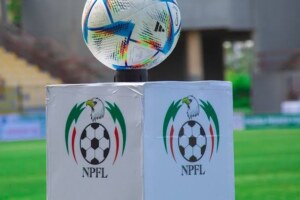
The headline numbers out of the domestic league are staggering. The 2026/27 NPFL champions will pocket a record-breaking ₦1 billion ($730,000 USD), while financial windfalls will extend deep down the table, including ₦800 million for the runners-up and ₦700 million for third place.
However, the real revolution lies in the base of the pyramid. The NSC approved a mandatory ₦2 million minimum monthly salary for all NPFL players, replacing the outdated ₦150,000 baseline.
By tying this minimum wage directly to stricter enforcement of club licensing regulations, NSC Chairman Shehu Dikko is effectively ending the era of unstable, state-subsidized club setups that run on accumulated debt.
“Players must earn a living wage,” Dikko stated. “This is how we build a league that commands respect at home and abroad.”
Clubs will now have to prove financial liquidity and bank guarantees to pass licensing. The economic barrier to entry has been raised, forcing a transition toward corporate ownership models, robust broadcasting partnerships, and commercial sustainability.
2. Institutionalizing Continuity: The $1.2M Annual Gamble
While the domestic league gets a corporate facelift, the NFF has moved decisively to eliminate the instability that typically plagues the Super Eagles’ bench.
By extending senior head coach Éric Chelle’s contract until 2030 and handing him the reins of the U23 Olympic Eagles, the federation is establishing a singular tactical identity across multiple age grades. To secure this continuity, Nigeria has pushed Chelle’s salary ceiling to a historic $100,000 monthly ($1.2 million annually).
Historically, separate youth coaches operated in isolation, leading to a fragmented transition of talent into the senior national team. Chelle’s dual mandate effectively synchronizes the pipeline, starting with immediate qualification operations for the 2028 Los Angeles Summer Olympics (July 14–30, 2028) and anchoring the project through to the 2030 FIFA World Cup.
The Synergy: Protecting the Pipeline
When analyzed together, these policies form an aggressive economic shield around Nigerian talent.
-
The ₦2M monthly minimum wage ensures that a rising star in Kano, Enugu, or Remo no longer needs to accept volatile, low-tier contracts in minor Eastern European or Middle Eastern leagues just to seek financial security.
-
The ₦1B league bounty gives local clubs the liquidity to match continental wages, build deep squads, and aggressively challenge North African dominance in the CAF Champions League.
-
Chelle’s dual portfolio ensures that those players who do stay and excel domestically have a direct, visible pathway under the watchful eye of the senior national team manager.
The Verdict
Throwing capital at sports infrastructure without strict oversight can be perilous, but the NSC’s insistence on rigid club licensing implies that structural accountability will walk hand-in-hand with this financial windfall.
With a billion-naira carrot at the top of the domestic table, a two-million-naira safety net in the dressing room, and a million-dollar tactical anchor leading the national teams, Nigeria has officially stopped treating football as a casual pastime. The business era has begun.

